Chimney Sweep in Dallas–Fort Worth
Traditional brushing and vacuuming of your flue, stovepipe and firebox. Serving homeowners across Dallas–Fort Worth.
What chimney sweeping involves
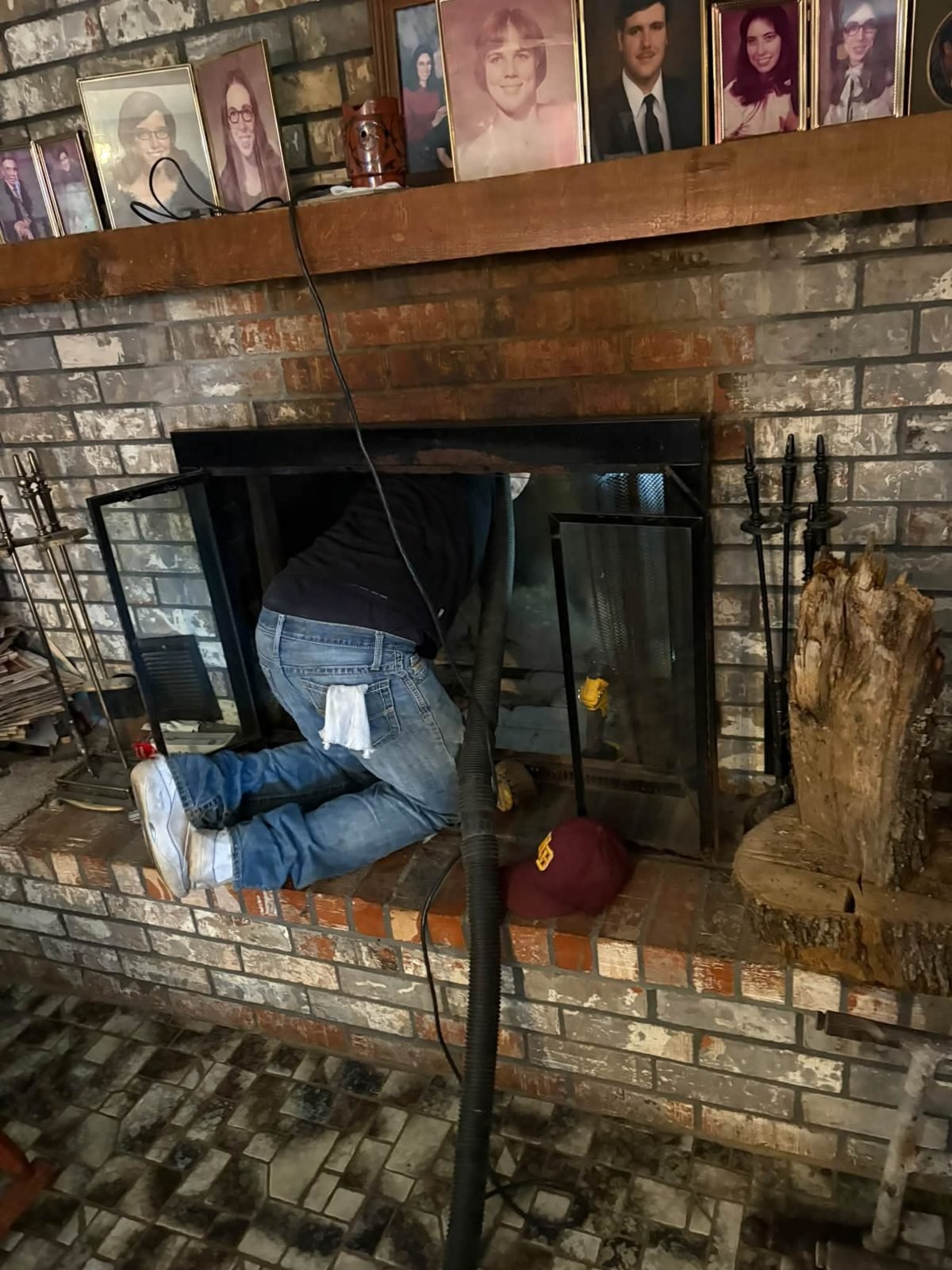
Chimney sweeping is the hands-on work of brushing the flue clean. We use rods and brushes matched to the size and shape of your flue, working from the firebox, the roof or both, while a vacuum captures the soot as it falls. For wood stoves, we also clean the stovepipe, baffle and firebox.
Why homeowners need it
- Removes creosote before it builds into a fire hazard
- Clears nests, leaves and debris that can block the flue
- Helps fires draw better and burn cleaner
- Wood stoves and inserts often need sweeping more than once a season if they're used heavily
What to expect at your appointment
- We protect your hearth and set up containment
- We sweep the flue and clean the smoke chamber and firebox
- For stoves, we clean the pipe, baffle and stove interior
- We tidy up and walk you through what we saw
Common questions
What is creosote?
Creosote is a black or brown residue that forms when smoke, vapor and unburned wood particles condense on the cooler walls of the flue. It builds up in three stages:
- Stage 1: Dry, flaky soot that brushes away easily
- Stage 2: Crunchy, tar-like deposits that are harder to remove
- Stage 3: Shiny, hardened glaze that's very difficult to remove and highly flammable
Creosote is the main fuel for chimney fires. Burning dry, seasoned wood, giving fires enough air and cleaning the chimney regularly all help keep it under control.
Do wood stoves need different cleaning than fireplaces?
Wood stoves usually need more frequent cleaning. They burn efficiently and hot, but when they're run low and slow they can produce a lot of creosote. The stovepipe, flue, baffle and firebox all need attention. Depending on the setup, the stove pipe may need to be removed and reinstalled during cleaning.
How do I know if my chimney needs cleaning?
Common signs include:
- Smoke coming back into the room, or fires that are hard to start and keep going
- A strong, smoky or tar-like smell, especially on hot or humid days
- Black, flaky or shiny tar-like deposits inside the firebox or flue
- Debris, soot or small pieces of tile falling into the firebox
- Animal noises or nesting material
- It has been more than a year since your last inspection
If you notice any of these, call us at 469-960-2007 and we'll help you decide what your chimney needs.
Can I use my fireplace immediately after cleaning?
In most cases, yes. If the cleaning goes as expected and we don't find a safety issue, you can usually use your fireplace the same day. If we find damage, such as cracked flue tiles, a missing liner or a blockage we couldn't clear, we'll explain the problem and tell you clearly if you should stop using the fireplace until it's repaired.