Chimney Cap Installation in Dallas–Fort Worth
New caps to keep rain, animals and debris out of your flue. Serving homeowners across Dallas–Fort Worth.
What chimney cap installation involves
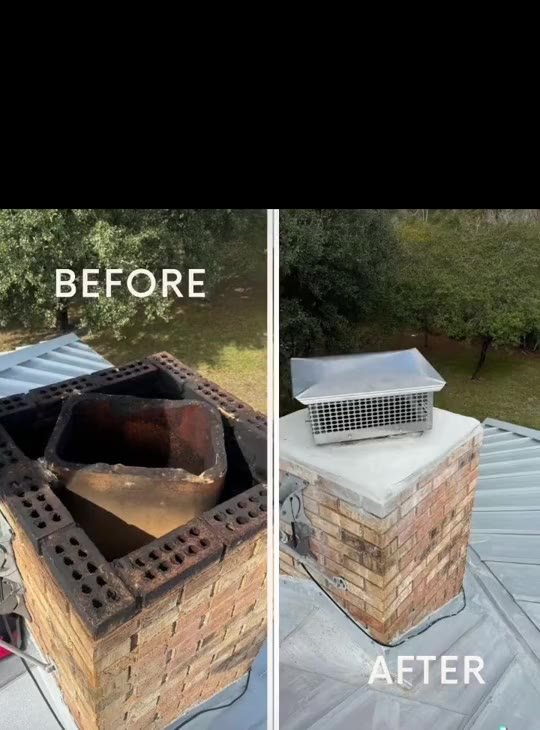
A chimney cap is a metal cover with a mesh screen that sits on top of your flue. We measure your flue and crown, recommend a cap that fits your chimney, and install it securely. If your old cap is rusted, bent, loose or missing, we remove it and replace it.
Why homeowners need it
- Keeps rain out of the flue, protecting the liner, damper and firebox
- Stops birds, squirrels and raccoons from getting in or nesting
- Keeps leaves and debris from blocking the flue
- The mesh screen helps keep sparks and embers from landing on the roof
- Can help reduce wind-driven downdrafts
What to expect at your appointment
- We check the top of your chimney and measure the flue
- We confirm the right cap for your chimney and the price before we install it
- We install the new cap and make sure it's secure
- We show you photos of the finished work
Common questions
Why is a chimney cap important?
A chimney cap sits on top of the flue and does several jobs:
- Keeps rain out, which protects the liner, damper and masonry
- Keeps birds, squirrels and other animals from nesting inside
- Keeps leaves and debris from blocking the flue
- Its mesh screen helps stop sparks and embers from landing on your roof or yard
- Can help reduce downdrafts caused by wind
For the cost, it's one of the most useful parts of a chimney system.
When should a chimney cap be replaced?
Replace your chimney cap if it's rusted through, bent, loose or missing, if the mesh screen is torn or clogged, or if it no longer covers the flue properly. Caps are often damaged by storms, hail, falling branches or simply age. If you see animals getting in or water in the firebox, the cap is one of the first things to check.
Why is my chimney making unusual noises?
Scratching, chirping or fluttering usually means birds, squirrels, raccoons or other animals have gotten in. Chimney swifts, a protected migratory bird, sometimes nest in chimneys during the warmer months and can't be removed while nesting. Rattling or banging can come from a loose cap, damper or flashing in the wind.
Important: A loud roaring sound, like a freight train, along with popping or crackling and dense smoke, can be a chimney fire. Get everyone out of the house and call 911.
Can Texas storms and hail damage my chimney?
Yes. Hail can dent or crack caps and chase covers, high winds can loosen caps and flashing, and heavy rain can find any weak spot in the crown or masonry. After a major storm, it's a good idea to have the top of your chimney checked. If you're filing a roof claim, mention the chimney too.